What is Resin Art?
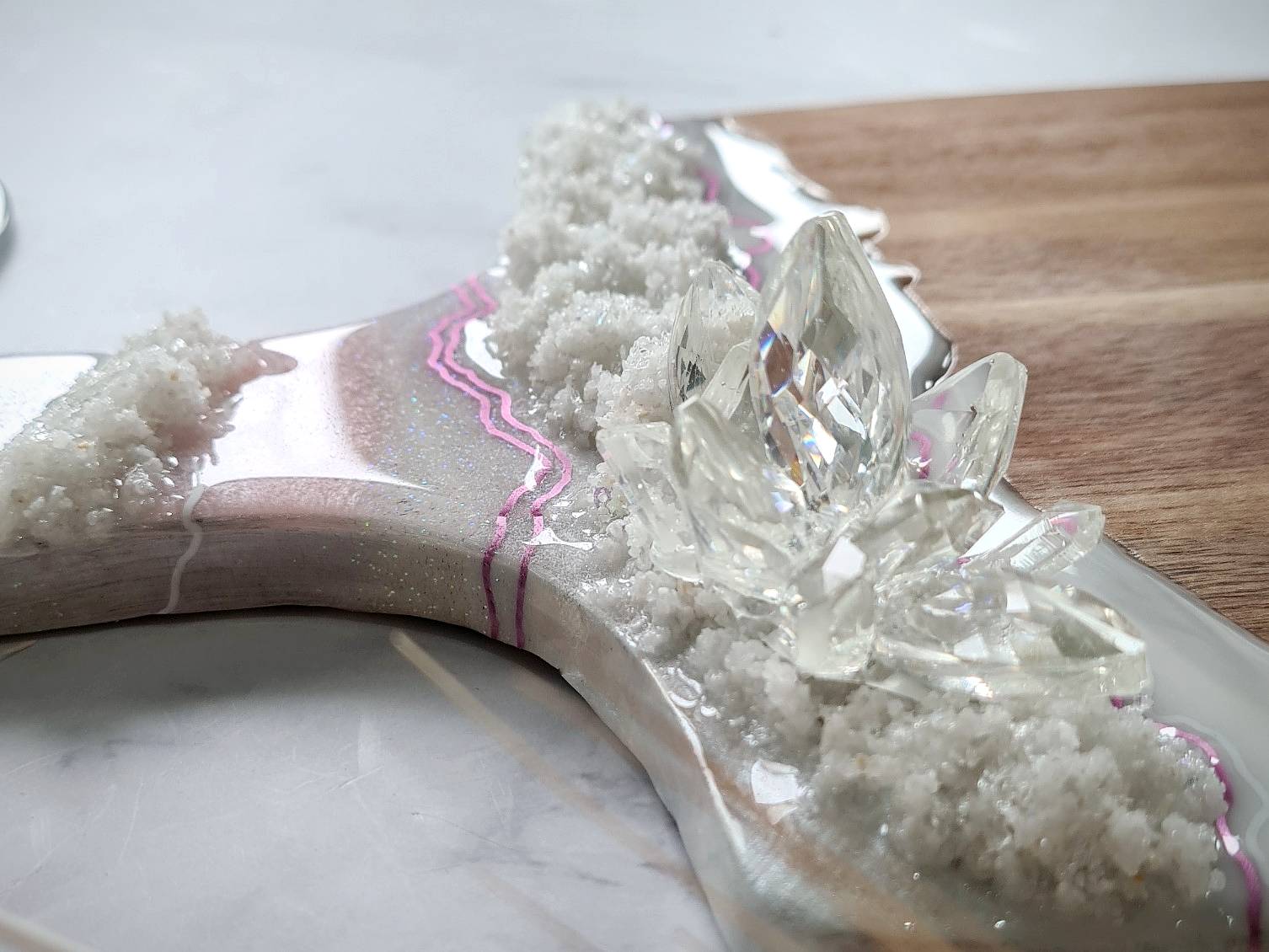
The name says it all: Resin Art is the creation of art using the material resin. You pour the resin into a (usually silicone) mold, and by applying different pouring techniques and pigments, beautiful artworks are created. Since resin is such a versatile material, you can make virtually anything with it. Think of figurines, coasters, jewelry trays, bookmarks, wall art, or even entire tables.

What is Resin?
Resin Art is created using a liquid casting resin. Casting resin consists of two liquid components: the resin and the hardener. Once you mix these two components, a chemical reaction occurs that generates a lot of heat. Due to this chemical process, the resin gradually becomes harder, making it less fluid, and eventually, it fully cures. Once resin is fully cured, it becomes incredibly strong and almost unbreakable.
Between mixing the resin and its full curing, there is a working time. During this working time, you can add pigments or other additions like glitter, stones, or rose petals. It is also during this working time that you need to pour the resin into its final form.
The effect of circumstances
How the design of your final artwork will turn out depends on many factors. You can pour the same resin into the same mold with the same pigments and still end up with a different result. The following factors also influence the final outcome:
- The temperature of the resin at the time of pouring (i.e., how thick or fluid the resin is)
- The temperature of the environment
- The amount of pigment used and the type of pigment
- The ratio of pigment to resin
- The pouring technique you use
– The motion you make while pouring
– The order in which you pour
– How hard or softly you pour - Other additions such as glitter, stones, etc.
– The quantity used
– The weight or lightness of the addition relative to the resin (whether it will sink to the bottom or float)
It is nearly impossible to achieve exactly the same result, especially if you’re trying to recreate an existing piece with resin from a different batch. Additionally, resin moves after being poured into the mold. So even when you consider all the above factors, you won’t have full control over the resin during the curing process.
This is what makes creating Resin Art so unique. On one hand, it’s a precise process where you have to account for all these factors, and on the other hand, it’s a “go with the flow” experience where the final result can be a delightful (or sometimes less delightful) surprise.
Advantages of resin
Why resin? Girl, have you seen that shine gezien 👀 Resin has a glossy finish all on its own. It gives a luxurious look, and it’s truly beautiful. Additionally, resin is so clear that it resembles glass. However, resin is much less fragile than glass. Once fully cured, resin is incredibly strong and nearly indestructible. My brother (big guy who has been hitting the gym four times a week for years) once threw a coaster on the ground with all his might because he wasn’t convinced of how tough resin is. He (and I, too 😆) was shocked to see that only a few small corners of the coaster had chipped off, and there were just a few scratches on it.
Moreover, resin is water-resistant and somewhat heat-resistant (depending on which resin you use), making it ideal for use as, for example, a soap dish or coaster.
Disadvantages of resin
Life is not just about sweet scents and moonlight, and the same goes for creating Resin Art. Unfortunately, there are a few drawbacks to working with resin.
Resin is not entirely scratch-resistant on its own, and it’s even less so when mixed with pigment. Therefore, it’s important to treat your Resin Art as actual art to prevent it from getting scratched. However, you might also consider topcoating your artwork with a glossy varnish.
Additionally, resin is not UV-resistant by itself. It’s not advisable to expose your artwork to direct sunlight, as this can cause the resin to turn yellow. A UV protector can slow down this process, but unfortunately, it cannot completely prevent it. So be sure to check when buying resin whether it includes UV protection or if you need to add it yourself.
Now that you know what Resin Art is all about, you’re ready to get started on your own creations. How, you may ask? Check out my blog post “Resin Art for Beginners.” In this post, I’ll tell you everything you need to get started, from protective gear to pigments, and what you need to do to make your first art piece shine.

Rebecca
Hi! Welcome to Resin Leef. My name is Rebecca, and in 2020, I started Resin Leef to create a space where I can share my enthusiasm for Resin Art with the world. Resin Leef is a place where you can stay updated on the best tips and tricks regarding resin, and get inspired for your next DIY project. Have fun!
Latest blogposts

Top 10 leukste onderzetter mallen van AliExpress
Goedkope Resin Art mallen van AliExpress Als je net begint met het maken van Resin Art, kan ik me voorstellen dat je niet gelijk dure[...]

Review: Silica gel van Polyestershoppen
Bloemen drogen met silica gel Dé beste manier om bloemen te drogen zonder ze te persen en zonder dat ze al hun kleur verliezen, schijnt silica[...]

Review: de mallen van Molds and Shapes
Onze ervaring met Molds and Shapes Menig Resin artist is erover te spreken: de mallen van Molds and Shapes. Als je, net als ik, iets teveel[...]

Luchtbellen uit epoxy resin verwijderen
9 tips om luchtbellen in epoxy te voorkomen en te verwijderen Luchtbellen in je epoxy is de nachtmerrie die zich alsmaar herhaalt. Helaas zijn ze[...]
The name says it all: Resin Art is the creation of art using the material resin. You pour the resin into a (usually silicone) mold, and by applying different pouring techniques and pigments, beautiful artworks are created. Since resin is such a versatile material, you can make virtually anything with it. Think of figurines, coasters, jewelry trays, bookmarks, wall art, or even entire tables.
What is resin?
Resin Art is created using a liquid casting resin. Casting resin consists of two liquid components: the resin and the hardener. Once you mix these two components, a chemical reaction occurs that generates a lot of heat. Due to this chemical process, the resin gradually becomes harder, making it less fluid, and eventually, it fully cures. Once resin is fully cured, it becomes incredibly strong and almost unbreakable.
Between mixing the resin and its full curing, there is a working time. During this working time, you can add pigments or other additions like glitter, stones, or rose petals. It is also during this working time that you need to pour the resin into its final form.
The effect of circumstances
How the design of your final artwork will turn out depends on many factors. You can pour the same resin into the same mold with the same pigments and still end up with a different result. The following factors also influence the final outcome:
- The temperature of the resin at the time of pouring (i.e., how thick or fluid the resin is)
- The temperature of the environment
- The amount of pigment used and the type of pigment
- The ratio of pigment to resin
- The pouring technique you use
– The motion you make while pouring
– The order in which you pour
– How hard or softly you pour - Other additions such as glitter, stones, etc.
– The quantity used
– The weight or lightness of the addition relative to the resin (whether it will sink to the bottom or float)
It is nearly impossible to achieve exactly the same result, especially if you’re trying to recreate an existing piece with resin from a different batch. Additionally, resin moves after being poured into the mold. So even when you consider all the above factors, you won’t have full control over the resin during the curing process.
This is what makes creating Resin Art so unique. On one hand, it’s a precise process where you have to account for all these factors, and on the other hand, it’s a “go with the flow” experience where the final result can be a delightful (or sometimes less delightful) surprise.
Advantages of resin
Why resin? Girl, have you seen that shine gezien 👀 Resin has a glossy finish all on its own. It gives a luxurious look, and it’s truly beautiful. Additionally, resin is so clear that it resembles glass. However, resin is much less fragile than glass. Once fully cured, resin is incredibly strong and nearly indestructible. My brother (big guy who has been hitting the gym four times a week for years) once threw a coaster on the ground with all his might because he wasn’t convinced of how tough resin is. He (and I, too 😆) was shocked to see that only a few small corners of the coaster had chipped off, and there were just a few scratches on it.
Moreover, resin is water-resistant and somewhat heat-resistant (depending on which resin you use), making it ideal for use as, for example, a soap dish or coaster.
Disadvantages of resin
Life is not just about sweet scents and moonlight, and the same goes for creating Resin Art. Unfortunately, there are a few drawbacks to working with resin.
Resin is not entirely scratch-resistant on its own, and it’s even less so when mixed with pigment. Therefore, it’s important to treat your Resin Art as actual art to prevent it from getting scratched. However, you might also consider topcoating your artwork with a glossy varnish.
Additionally, resin is not UV-resistant by itself. It’s not advisable to expose your artwork to direct sunlight, as this can cause the resin to turn yellow. A UV protector can slow down this process, but unfortunately, it cannot completely prevent it. So be sure to check when buying resin whether it includes UV protection or if you need to add it yourself.
Now that you know what Resin Art is all about, you’re ready to get started on your own creations. How, you may ask? Check out my blog post “Resin Art for Beginners.” In this post, I’ll tell you everything you need to get started, from protective gear to pigments, and what you need to do to make your first art piece shine.
Rebecca
Hi! Welcome to Resin Leef. My name is Rebecca, and in 2020, I started Resin Leef to create a space where I can share my enthusiasm for Resin Art with the world. Resin Leef is a place where you can stay updated on the best tips and tricks regarding resin, and get inspired for your next DIY project. Have fun!
Latest blogposts
Top 10 leukste onderzetter mallen van AliExpress
Goedkope Resin Art mallen van AliExpress [...]
Review: Silica gel van Polyestershoppen
Bloemen drogen met silica gel Dé beste[...]
Review: de mallen van Molds and Shapes
Onze ervaring met Molds and Shapes Menig[...]
Luchtbellen uit epoxy resin verwijderen
9 tips om luchtbellen in epoxy te voorkomen en[...]